

Internal Planetary Systems
Internal Planetary Systems is inspired by Internal Family Systems and is designed to create space for compassionate self-actualization, using the planets in our astrological birth charts, as our internal parts. The planets describe the condition of our parts on several levels.

creator unknown, please contact to claim authorship
The beginning of Internal Planetary Systems
I created Internal Planetary Systems when I recognized the impeccably aligned parallels between the archetypes and planets of astrology, and the Internal Family Systems therapy model. Astrology is not only, in my opinion, the original parts work, but it also relates beautifully to several other healing techniques including archetypal psychology, and narrative therapy. Archetypal psychology seeks to create self-understanding through explorations of internal archetypes and how they express themselves. And the narrative model challenges standard myths and constructs, seeking to empower the individual in relating to their experience through authoring their own reality with self-compassion and aligned values. Internal Planetary Systems integrates the ancient archetypes of the zodiac, the narratives and myths they enact and pass down through generations, and the parts that articulate different characteristics both empowered and disempowered.

creator unknown, please contact to claim authorship
What is Internal Planetary Systems?
Internal Planetary Systems is inspired by Internal Family Systems and is designed to create space for compassionate self-actualization, using the planets in our astrological birth charts, as our internal parts. The planets describe the condition of our parts on several levels.
First, the planet itself represents an archetype, it is a character that is playing a role on a stage (the house) set with particular scenery (the zodiacal sign). To use another metaphor, The planet is a character or creature, living in a certain landscape (the house) with certain environmental qualities (the sign). Venus, for example, is the goddess of love, beauty, relationships, values, and justice. Internally she represents our romantic expression, our creativity, feminine divinity, pleasure, values, and relational body.
Mars represents our martial faculties; it is the warrior within, or for more gentle folks, the hill we would die on. Mars embodies our desires, our efforts and passions, it is our willingness to bleed for a cause and our determination. It is our vital energetic force, the power that lives within our body, motivates us, and provokes us to action. For the rest of the planets, you’ll have to take my course or do your own exploration.
Second, the location of the planet, the house it is in at the moment of the native’s birth, describes the stage where it enacts its role. The location of the planet indicates the part of the native’s life that experiences a concentration of that particular energy. Themes of this location will be magnified and illuminated. Perhaps the native has several planets in one house, this is called a stellium when it is 3 or more, there they will notice a focus of meaning-making and purposeful growth. The lessons for the native and that particular part of themselves will be most evident in that area of their life.
1st House: the self, identity, the body, style, presentation to the public
2nd House: resources, values, worth
3rd House: the neighborhood, siblings, communication style, ideas
etc. …for all 12 houses
Third, the condition of the planet, the sign where it resides, gives us insight into the resources it has access to and the ways this part expresses itself. The zodiac sign that the planet, the part, resides in at the moment of the native’s birth, is like the scenery on the stage where it plays its part. Some signs offer much support to a particular planet while other signs are recognized as a challenging landscape for that planet to navigate. Of course, challenging realities often make for resilient and resourceful people. Some even say demanding dynamics build character.

creator unknown, please contact to claim authorship
And finally, there is a simple, yet highly effective technique that I use to describe the age we first integrated the part embodied by each planet. It is called the pinball method and it makes operative the degree of the planet. The age we began learning crucial lessons about that planet is illuminated by the degree. We are invited to reflect, meditate, and or journal on the year that corresponds to the degree of each planet to gain awareness of how our relationship to that planet began. Much like Richard Schwartz’s technique recognizes the various ages of each part, the planets are located at certain degrees within each sign of the zodiac and this degree speaks to the age. For a planet located at the 9th degree, the tool becomes, a meditation on the 9th year of life and what that year taught us about the qualities, characteristics, and behaviors of that planet. This allows us the potential to integrate the lessons of each planet by the time we experience our Saturn return, a time defined by lessons of discipline, maturity, intentionally set boundaries, and commitments. The Saturn return occurs by the 29th year, and the degrees, 0 to 29, of each sign ensure we have at least met each planet before our 30th solar return.
How does Internal Planetary Systems work?
Archetypes help us to organize and categorize the characteristics, patterns, and relationships that shape our world. By deepening our relationships to the archetypes and the planets, we can understand the nuances of these cycles and significations. The myths and stories that are embedded in our culture, ourselves, and our ancestry, form who we are and how we relate to the world and the identities we are embodying. Archetypes articulate and embody the “metaphors we live by” (Lakoff & Johnson, 1980).

creator unknown, please contact to claim authorship
Intentionally cultivating relationships with the planets externally, supports an internal process of relationship building with our complex, internal parts. Exploring the archetypes and the nuanced narratives and themes they portray reinforces the compassion we can offer ourselves as we navigate self-actualization. Even the astronomical cycles, as simple and familiar as the full moon, can offer us immediate relief as we acknowledge a pattern of disturbed sleep on a monthly basis. This knowledge can inform and mobilize our self-awareness and self-care practices affording us a solid foundation on which to heal and transform.
The native is invited to recognize and reflect on each of the planets in their chart, their placements in both house and sign. The degree of each planet offers coordinates to the year that is punctuated by the first integration of that planet and its archetypal significance. Special attention is paid to the planet ruling the chart as I believe it may be best related to as the highest self. The native takes particular inspiration from the constellation on the horizon at the moment of their birth; this is the rising sign or ascendant. The celestial body that governs the rising sign, therefore becomes something of a muse for the native throughout their life. A Sagittarius rising, for example, is ruled by Jupiter and is invited to embrace empowering expressions of the God of Thunder. By asking ourselves, “what would [insert ruling planet here] do?” we can pray to the solar system, offer reverence to our patron god, connect with the archetype that stretches across time and space, and offer ourselves faith and compassion in an uncertain world. It is well-studied that faith offers peace in disturbing times, making astrology a particularly powerful tool of connection and transformation.
“History doesn’t repeat itself, but it often rhymes.”
As we practice reflecting and relating to the zodiac and our internal parts, we learn to sustain connection and recognize patterns internally and externally. By watching the orbits of the planets in the sky, we can prepare to meet challenging moments with mindful awareness and celebrate ease and prosperity with reverence and gratitude. We can witness and honor the depths and complexities of the people we are in orbit with, by offering understanding to their expressions of the archetypes they are called to learn from. The lessons we can learn from history become undeniably clear, calling for the presence of mind, body, and spirit in our current time/space so we may transcend historical patterns, learning from the past.
Why is Internal Planetary Systems valuable?
“The meaning of life is to give life meaning.”

creator unknown, please contact to claim authorship
Astrology is a meaning-making system. It articulates thematic areas of transformation, reinforces ancient archetypal narratives, and embodies celestial cycles. By developing awareness and understanding of each of the planets in our chart, how they thrive, and where they are challenged, we can recognize the multitudes within while connecting to the cosmos. We can increase capacity for self-acceptance through an intentional approach to the diverse and complex parts of ourselves. As we cultivate a deeper relationship with the different elements of our internal world, we can connect more purposefully with the time/space we are born into.
Actively participating in the zodiacal journey of the planets in our solar system through observation and self-reflection offers opportunities to live with a sense of wonder and purpose that is fortifying and dynamic. Transformation and healing become as playful as it is purposeful when we connect to our internal world with compassion and a sense of belonging in time and space. This presence, connection, and transformation is what Internal Planetary Systems offers us.
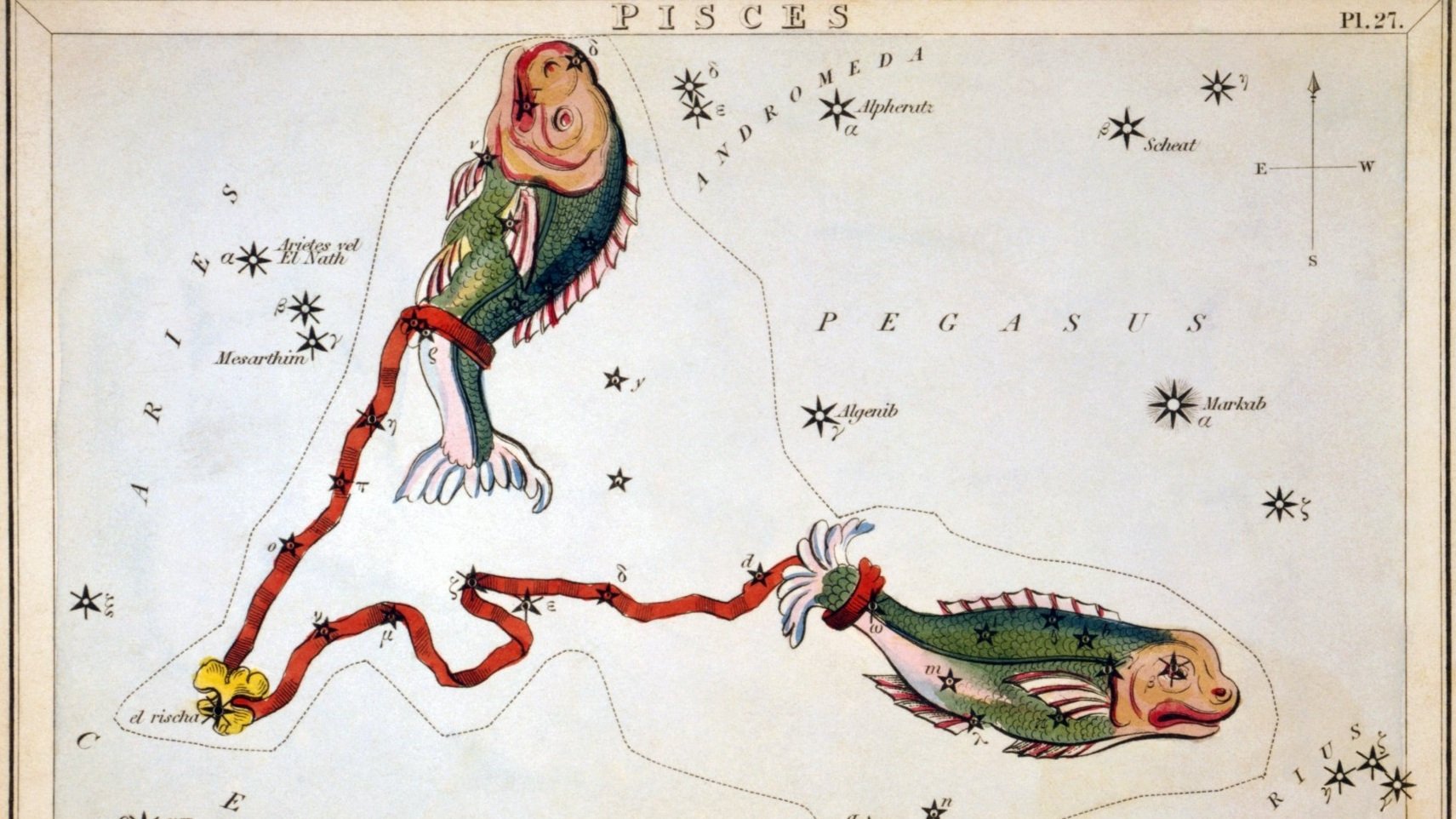
Pisces: connection + boundaries
The meaning of Pisces combines the mutable mode of adaptation and responsiveness with the sensitive and emotive properties of water. Pisces navigates the spectrum of boundaries, moving from boundlessness that leaves us with nothing to connect to and boundaries that create healthy and sustainable connection. It describes how vulnerable we become to losing ourselves to substances, experiences, and relationships without boundaries. On the other hand, it represents the boundaries that endorse healthy connection and inspire a love solid enough to hold onto.

Pisces is the zodiac symbolized by two fish swimming in opposite directions. This image reminds us that two things can be true at once, drawing on the mysticism and the vast unknown associated with Pisces.
Pisces navigates the spectrum of boundaries, moving from boundlessness that leaves us with nothing to connect to and boundaries that create healthy and sustainable connection. It describes how vulnerable we become to losing ourselves to substances, experiences, and relationships without boundaries. On the other hand it represents the boundaries that endorse healthy connection and inspire a love solid enough to hold onto.
It is the mutable, meaning flexible and changeable, water sign and the last archetype in the zodiac marking the death and rebirth of cycles. In many traditions and certainly Tropical Astrology, water signifies emotional and intuitive powers. Combine the mutable mode of adaptation and responsiveness with the sensitive and emotive properties of water and we have the highly intuitive, creative escape artist that is the sign of Pisces.
Pisces is poetry, the lyrical reality, the liminal space where dreams materialize and riddles are the best questions to ask. This archetype is as much blessed as it is cursed by porosity, a lack of boundaries that leave this narrative plenty of opportunities for martyrdom and sacrifice. Perhaps the most ‘spiritual’ of the signs, Pisces offers lessons in allegory and symbolism. It is best described in metaphor if we hope to capture the mythical siren that is Pisces.
The nature of Pisces is mystical, dreamy, and highly changeable which can lead us down tangential paths when trying to capture the meaning of this elusive archetype. I often find myself struggling to put the Piscean archetype into words, instead becoming distracted or losing my train of thought as the phantasm of this archetype blurs definitions. Pisces is associated with illusion and delusion and often teaches lessons of faith by demonstrating what is not real and what cannot be proven, requiring us to discern for ourselves the meaning and pathway that inspires us.


The ancient ruler of the sign of Pisces was Jupiter. This affinity describes the faith-based lessons of Pisces through the expansion and ascendance articulated by Jupiter. In 1846 the planet Neptune was discovered and then identified as the ruler of this aquatic sign. This era was marked by a number of archetypally relevant discoveries including significant developments in pharmaceuticals and photography. Both pharmaceuticals and photography are fraught with complex layers of illusion and delusion. Both fields hold mysterious narratives such as ghosts captured on film during the early days of photography that were actually the photographer passing through the image while the very low sensitivity of the film required the subject to stand still for a while to allow the image to develop on film. This would create a blurry image of the “ghost” while the subjects believed they had been visited by a deceased ancestor while holding very still for the portrait. The use of photography in court can also offer some concerns for deception as so much faith is put in what we see when in reality, much can be manipulated or mutated to create an illusion our eyes can easily believe. Meanwhile, pharmaceuticals and the industry that has manipulated and contorted the art of pharmacology and herbalism has created a complex narrative of illusion in response to diagnoses of delusions. Pharmaceutical treatment of mental health produced innumerable opportunities for distortions of reality which mirrors the fantastical and hallucinogenic properties of Pisces seamlessly. Corresponding with the chemical sensitivity, the emotional manipulation, and the discrepancies in perception of reality the Pisces archetype and natives navigate narratives of addiction, escapism, and the vast subconscious.

The connection between Pisces and mental health goes deeper than pharmacology as it reflects the unseen, the emotional, and the subconscious areas that are explored and ideally integrated in mental health practices. The porosity of this archetype makes lessons of boundaries a key theme in the Pisces narrative. Whether they are boundaries of abstinence or discernment, limited access to resources or relational, boundaries are the balm to the sacrificial nature of Pisces.

Sandro Botticelli, The Birth of Venus (c. 1484–1486)
The planet Venus is exalted in Pisces, an alignment best articulated by the enlightenment of compassion, the highest form of love. The love Venus brings to a Piscean landscape has the opportunity to spread with the boundlessness of the kind of love we associate with spiritual leaders like the Buddha, Jesus, and Mohammed. It is the ideal love, without restriction or regulation. It is the fantastical love of fairy tales and our wildest dreams. The sensitive and flexible environment that is Pisces, provides the perfect context for the subconscious to come to the surface and intuition to be explored. This same context can induce the urge to escape and dissociate. Where feelings are expressed with vulnerability and fantasy can be articulated without shame, that is where love thrives, where Venus flourishes.
Venus’s exaltation in Pisces also ties together the connection to Neptune. The Greek counterpart to Venus, [the origin of Roman Venus appears to be missing] Aphrodite, was born of the sea, Neptune’s domain.
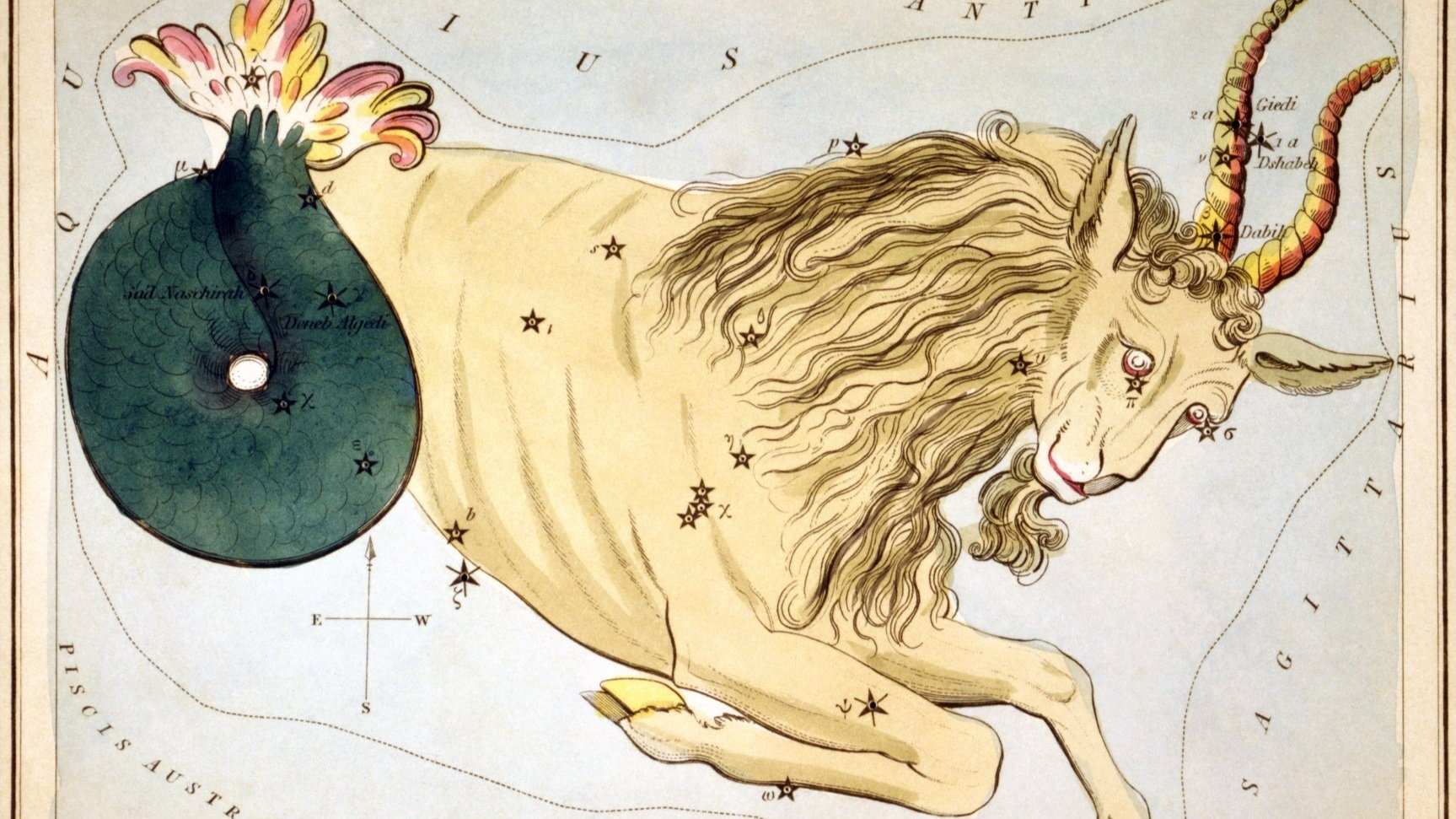
Capricorn: Use and Conservation
The archetype of Capricorn exists on a spectrum of use and conservation. It speaks to the governance of resource and intentional management of time, space, and goods. The archetypal opposites that depict the spectrum of Capricorn, the modern capitalist banker, willing to cultivate capital wealth based on a precarious and unsustainable value system at the expense of the environment and future generations on the one hand; and the purposeful indigenous ancestors who planted seeds generations ago, knowing they were creating sustainable wealth for the future based on time tested wisdom that honors the sacred land on the other.
The archetype of Capricorn exists on a spectrum of use and conservation. It speaks to the governance of resource and intentional management of time, space, and goods. The archetypal opposites that depict the spectrum of Capricorn, the modern capitalist banker, willing to cultivate capital wealth based on a precarious and unsustainable value system at the expense of the environment and future generations on the one hand; and the purposeful indigenous ancestors who planted seeds generations ago, knowing they were creating sustainable wealth for the future based on time tested wisdom that honors the sacred land on the other. The legacy is what matters to ambitious Capricorn, and the lessons of this cool, boundaried, and powerful archetype are focused on whether it’s all worth in the end.

When there’s nothing left but your name, what will it mean?
Capricorn is the archetypal embodiment of economics. The root of the word economy leads us to the original meaning that signifies management of the home or clan. This is where the practical nature of Capricorn shines bright; a great deal of responsibility and pragmatism must go into maintaining the stability of the home, its structure and resources, over time. This means a strong understanding of what is valuable, what is “worth it” must be cultivated to make sustainable choices. It means understanding the needs of the collective and maintaining enough distance to make hard choices that are required of a leader. It means holding space for all of the emotional complexities of the home and supporting healthy boundaries that are the foundation of healthy relationships.
Capricorn is a cardinal sign that is oriented toward initiation of action and the competitive desire to achieve. It is also an Earth sign, making it materially and tangibly inspired and motivated. The Earth, moved by the cardinal modality initiates purpose and meaningful action toward efforts that will last. Capricorn creates structural integrity out of generational wisdom and ancestral tradition to forge a purposeful foundation stable enough to hold the future.

The constellation of the Sea Goat has a number of origins including the goat nymph that raised Zeus in hiding to protect him from his father. Amalthea, the goat nymph was rewarded for her service to Zeus’ Mother, Rhea by being put into the sky for eternity. Another Greek myth tells the story of Pan, Amalthea’s brother, half man and half goat who was turned into a fish so he might survive the waters and escape the rage of Typhon. Some myths go farther back to Babylonian times when the God Ea climbed out of the rivers he ruled in a cape of fish skin. No matter the story, there is a strong connection to Saturnalian as the ancient holiday of debauchery, gluttony, and sexual abandon fell during Capricorn season and celebrates the same God (Saturn) that rules the sign of the Sea Goat.
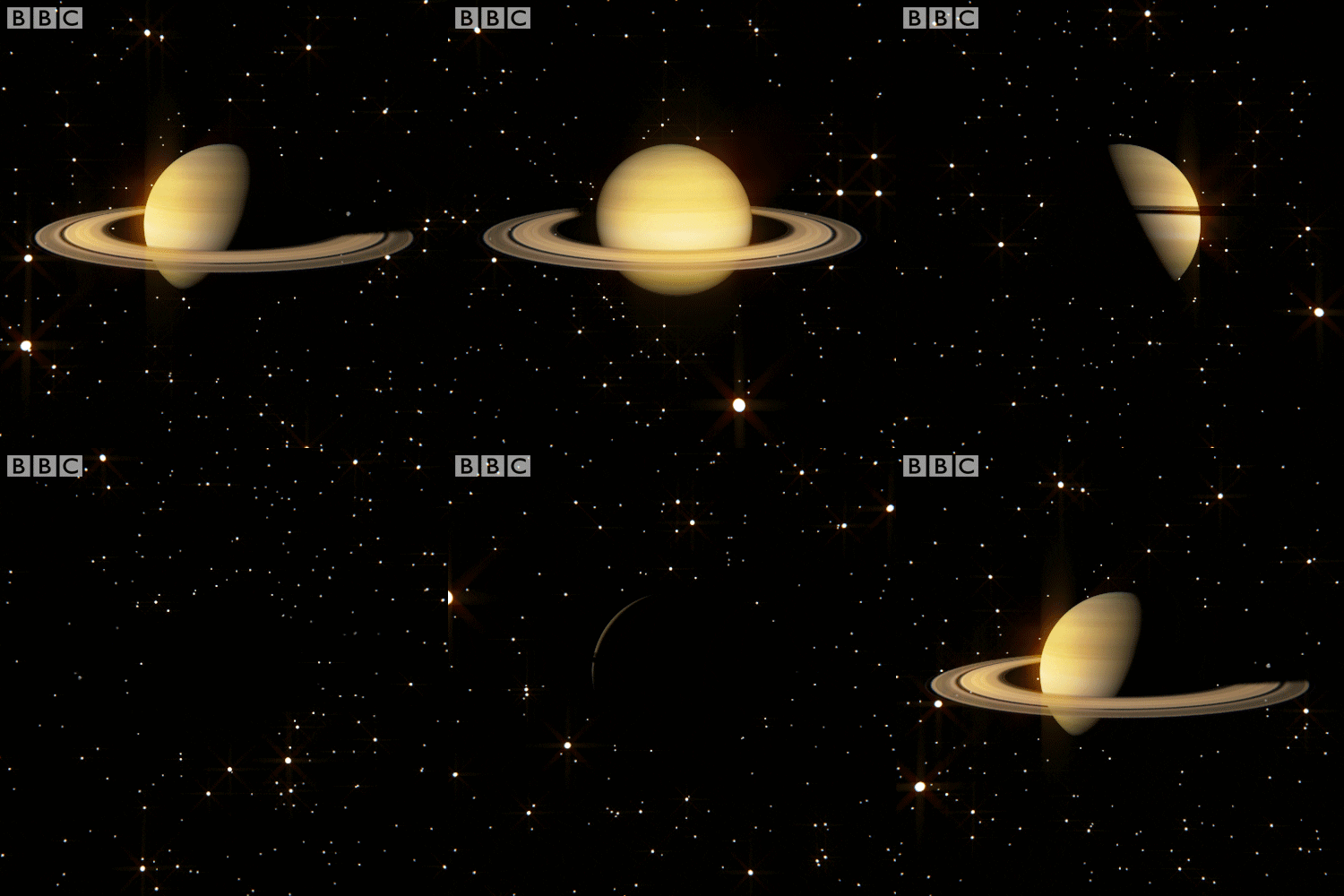
The ruling planet of Capricorn is Saturn which is the embodiment of time, structure, discipline, authority, boundaries, and maturity. Saturn reinforces the systematic techniques of the intentional steps used to create a lasting of Capricorn. The Saturn cycle marks our path to maturity and responsibility, taking a full 29 years to complete. Saturn is the slowest moving planet of all that can be seen by the naked eye and is also therefore the last planet that can be seen without technological support.
In our body, Capricorn rules the shins and all bones, our joints, skeletal system, and our teeth. The hardest parts of us that provide structure and perhaps remind us of the passage of time the with particular persistence.
Capricorn speaks from purpose.

The etymology of purpose describes the tension between action and intention that Capricorn must learn to articulate and embody. The urge to take action and the need to understand who, what, where, when, why, what for of it all, are at odds. As pro/por indicate the forward action of cardinality, the pauein/pausis/pausa/pausare/poser indicate the need to hold back, take pause, to place before losing track of the goal or target.
Knowing when to end calculations and take action is a lesson of Capricorn. Understanding which actions are worth taking and which costs cannot be avoided is a lesson of Capricorn. Coming to terms with ends justifying the means is a lesson of Capricorn. Balancing the urge to move into the future and hold on to valuable traditions of the past is a lesson of Capricorn.
Boundaries
The archetype of Capricorn teaches through boundaries. It can be challenging to calculate our boundaries and be discerning when it comes to how and when we spend our resources. Often we are taught lessons of boundaries by failing to hold them or by setting such impossible boundaries we must choose not to enforce them. We may learn what too much looks like by missing the indication we have gone too far by hitting our limit and facing harsh consequences. We may learn what not enough looks like my allowing ourselves to be overworked and exploited only to hit a wall of burnout too taxing to ignore. Whatever the context, we learn lessons of boundaries and limitations through the sign of Capricorn and its Ruler Saturn.
The planet Saturn is the symbol of boundaries and demonstrates as much through the structure of the planet with its rings of spinning rocks hurtling through space in an exceptionally organized format. As individuals we must learn to hold onto our own structure to protect us from being forced to conform to a shape that is inauthentic to our systems and values. Boundaries are the structure that support engagement; they are the foundation of any healthy relationship as they allow relating while upholding enough structure that all parties are able to maintain their own authenticity. By developing healthy boundaries, we conserve our own and other’s values and resources and we maintain sovereignty.
Remember:
Boundaries are the distance I can love you and me simultaneously.

We need not treat our boundaries like a series of brick walls that surround us to keep everything out. Instead, we can treat them more like a lovely home with fine doors and windows with secure latches, that is designed to invite folks in when the time and resources allow and keep out whatever or whomever depletes our resources.
Capricorn Keywords
Empowered: ambitious, paternal, pragmatic, developmental, structural, lessons of sustainability and legacy
Disempowered: elitist, high and mighty, unfeeling, singleminded, power-hungry, dissociated

Libra: The Divine Lessons of balance
The divine lessons of Libra invite us to collaborate and cooperate. The trick is to avoid conjoining, losing the tension that creates the limitations required for creative success. In any good collaboration, there is true divinity in asserting individuality as much as making room for commonality.
How do we describe Libra?
The divine lessons of Libra invite us to collaborate and cooperate. The trick is to avoid conjoining, losing the tension that creates the limitations required for creative success. In any good collaboration, there is true divinity in asserting individuality as much as making room for commonality. Harmony is not made beautiful simply by similarity, but through the divine tension between alignment and variance. The best collaborations allow both voices to be heard, both messages to be sent and received, both creators to be challenged, inspired, and admired in connection to a whole that is greater than the sum of either of its parts.

Libra is a love scholar that teaches us through the spectrum of individuation and cooperation. She is the most magickal when she can embody mutuality and independence in one breath.
Libra teaches us lessons of balance.
Very often we learn through the inverse; we may be taught to be gentle through experiences with roughness, we may be taught generosity through selfishness, and we may learn to value connection through lessons of isolation. Libra lessons often come from moving too far in one direction only to have the pendulum return so quickly it’s momentum carries it again, too far in the other direction.
I often witness and experience the lessons of codependency and interdependence in this same swing of the pendulum or struggle to balance scales, to add a new metaphor. For those who were challenged with parentification, who became care takers far too young, the urge to take care is now likely just as strong and the urge to reject care for ourselves. Then, as awareness and healing repair the wound, both the urgency around caring for other and the readiness to be cared for become easier, more available, and less likely to generate activation and reactivity. As things become even more balanced in the healing process, the willingness to allow others to suffer the consequences of their actions begins to expand, and new cycles in the spiral that is healing and balancing are discovered.
What does Libra look like?
She is a gallery, refined, thoughtful, full of tasteful art and reflections of aesthetic symmetry and creativity of the highest value. She is the mark of civilization, of things made legible, clarified, defined and named beautiful for their purity.
What does Libra feel like?
She is most empowered with clear and healthy boundaries. She is most exalted with structure, discipline, limitations, and a clear ethical code. She is dignified in devotion to diplomacy, cooperation, and collaboration. She if soft to the touch but cool and balanced by her careful restraint. Libra feels like the satisfaction of justice.
What does Libra taste like?
She is mild, likeable, even, and appealing. She is a well-balanced wine, refined with time. She is a perfectly ripe fruit at the balance of the equinox.
What does Libra smell like?
If Libra were a perfume she would be gentle, soothing but heady. She would be a scent that is hard to forget but never challenging. She would be clean, pure, and decisively ripe without ever becoming overpowering or unfairly assertive.
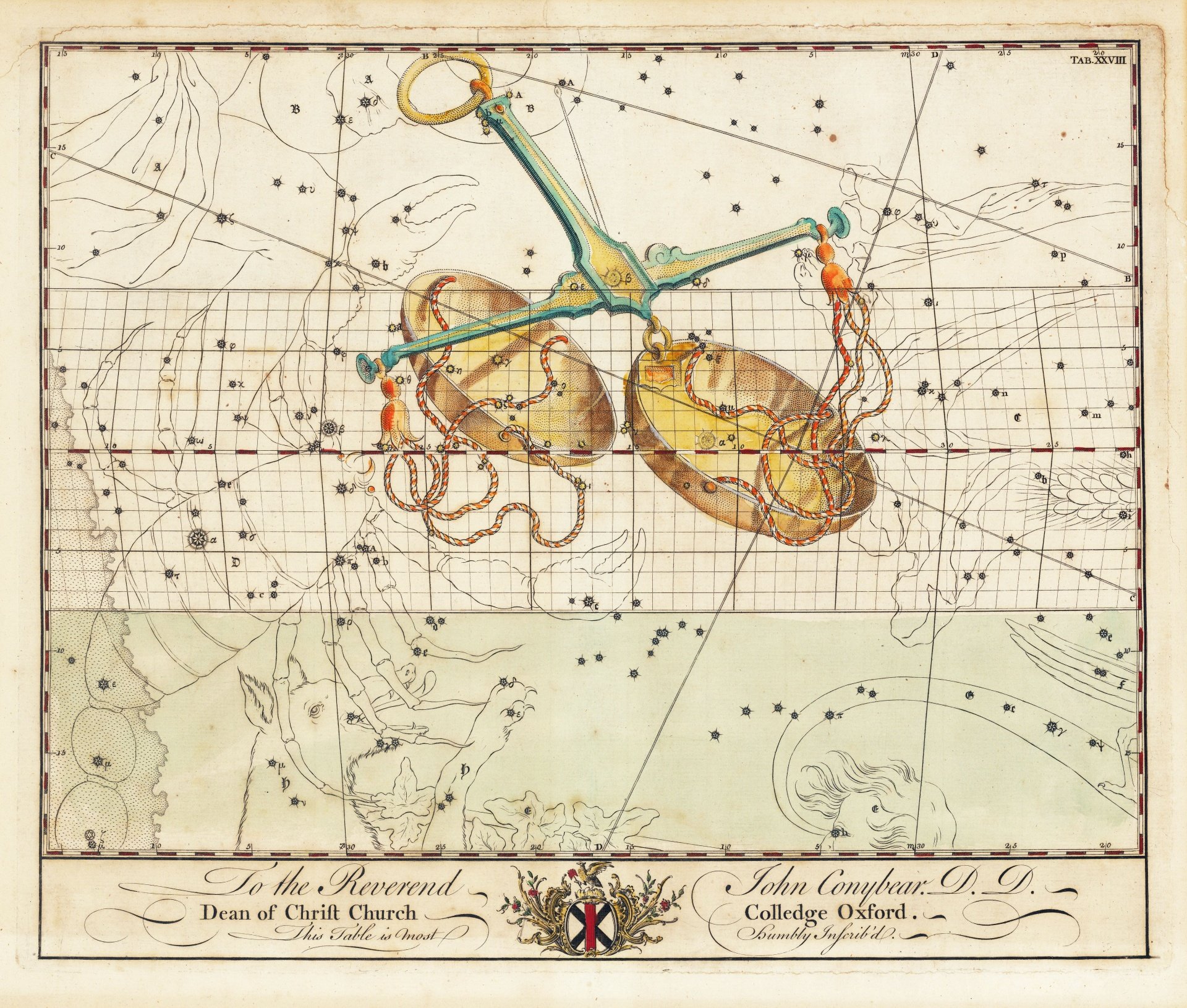
The Mythology Connected to the Libra Constellation
The constellation of Libra is considered to be the Titan Goddess Themis who was sister to Nemesis and second wife to Zeus. She is the goddess of justice, legislation, divine law, and harmony with nature. She carries a sword to cut the truth from the lies, and her scales are the symbol of the justice she upholds. Themis is the Goddess of peacemaking, balance, seeing other’s point of view, along with divine awareness, and social graces. If disregarded, it is her sister, Nemesis, who punishes. Nemesis is the consequence of failure to regard Themis and her Libra qualities.

This narrative again conjures the awareness of collaboration and balance. The Libra Titan herself does not operate alone, but she is still quite individual. She is interdependent, offering her magick in divine cooperation with her sister.
The same could be said of her relationship to Zeus. Through this collaboration she birthed the three Horai and the three Morai. While the Horai governed the measure of time, the orderliness of divine law, the Morai determined the path of fate, the purpose and the process of divine law. Even her offspring cooperate to create a sense of order, of fairness, and of divine balance.